Monday, September 25, 2006

RPC IV Online

The University of Oxford has put RPC IV online. This is a big deal, as it hasn't even been published yet! The best database for provincial coins of the Antonines (138-193AD), with 9,061 images; 13,730 types; and 46,725 total specimens.

http://rpc.ashmus.ox.ac.uk/.

It's very handy and easy to use. The only oddness is that there is no way to specify if a search is to be done over the 9000 images or the 46,000 specimens. One does the search, then gets an option to go back and change the search settings.

The RPC numbers are provisional. However, for each result it will give other publications of the coin, so except for previously unpublished pieces there will be a safe, usable catalogue number.

Saturday, September 23, 2006

New York Invitational Coin Show

I went to the New York Invitational Coin Show yesterday. Although advertised as 100 tables, there were about 20 dealers. One dealer told me that some dealers skipped Friday because of Rosh Hashanah (and perhaps low attendance?) The room was set up for 100 tables so looked pathetically empty.

The ancients dealers were Freeman&Sear, Herakles, Barry Murphy, Smythe, and Dr. Saslow. (Louis DiLauro was there but didn't bring his ancients!)

Other years there have been many more dealers. I was also disappointed that there was no weekend day -- who wants to take a vacation day to see such a small show?

The dealers were grumbling about the venue -- the fifth floor of some old building. The room itself seemed fine to me. Usually NYC coin shows are held in hotels, because there is no nearby parking or security otherwise. Who wants to walk around the streets with $$$ in coins and heavy display cases?

Tuesday, September 19, 2006

What is 'cashsoldier.com'?

snible.org's provider, linuxwebhost.com, gives me statistics about how much traffic I receive and where it's coming from.

When uesrs visit snible.org through links (rather than bookmarks) the pageview rank is:

36% from cashsoldier.com
29% from other snible.org pages
10% from google.com, google UK, and google Canada
6% from wildwinds.com
2% from adblusky.com
1% from yahoo search

I'm certain the traffic from Wildwinds is people seeking ancient coin info. I get slightly more traffic from Google. I don't know the terms the Google visitors want, but I expect a lot of them are looking for coin and ancient greece info.

I was surprised to see cashsoldier.com in the top spot. 9185 requests for 'VerifyerLevel.php' from them. Some kind of bot or malware trying to hack me?

Requests from them just started this month. A few web sites have cashsoldier and VerifyLevel.php in their logs, but I haven't seen any report of what is trying to be accomplished by requesting that file from me 9000+ times.

PS This week is the New York Invitational Coin Show. No weekend hour for this show &mdash it's Wednesday through Friday. I am not sure I want to take a vacation day to attend a coin show. If I had a day for coins I'd rather go to the ANS library. Any readers going to the show?

Sunday, September 17, 2006

Google Image Labeler


I've been playing a game called Google Image Labeler. Visitors are connected to another player, picked at random, and are then presented with a series of images. To score, the player must guess how the other player will describe the picture.

This is usually easy, as most of the pictures can be described as 'man', 'woman', 'people', 'building', 'stars', 'moon', 'weather', 'text', 'windows', or 'web site'. The fun comes from odd images that are difficult to describe.

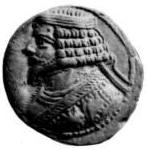
Today while playing I encountered a picture of an ancient coin. After a few false stats my partner and I agreed upon the description of 'broken'. The picture, which can be seen above, comes from the Archeological Museum of Kazan State University in Tarterstan, Russia.

An hour ago I didn't know that there was a 'Tarterstan'! Another part of the fun of a game like Google Image Labeler is the chance to be exposed to random websites that one would never otherwise encounter.

Monday, September 11, 2006

Copyright, e-Sylum, need advice

Science fiction author Cory Doctorow has a nice essay on copyright on Locus Magazine's web site.

My reply to Kerry Rodgers and Bob Knepper on copyright and images of collectables appeared yesterday on the e-Sylum (a numismatic book email list). This week's e-Sylum isn't available on the website yet, but will be soon. Or subscribe.

Need advice: This blog didn't appear in The Celator's round-up of ancient coin blogs. Perhaps I am not promoting it correctly. Where is a good place to announce and promote coin blogs?

Thursday, August 31, 2006

Hackers attacking ancients.info?

Attempts to visit ancients.info are either not being answered or coming up reading 'by kuwait hacker'.

Ancients.info hosts an ancient coins discussion site and photo databases. I visit nearly every day. The site is run by Bill Puetz, who also designed and runs Vcoins. Vcoins does not appear hacked but was responding slowly, possibly because it shares resources with ancients.info.

This doesn't seem to be an attack on this specific site; Google reports 46,000 sites with 'kuwait hacker' in the text. Most of these are defaced sites, a few are discussion sites asking about it. Seems to be a mass attack on Linux-based web sites?

The oldest mention I found is this post on flarf.com announcing the founding of a Kuwait hacker organization.

Wednesday, August 30, 2006

PDF downloads from Google Print

Google is now letting anyone (in the US only?) download PDFs of many public domain numismatic books. I see BMC Sicily (6.2 MB), BMC Macedonia (4.7 MB), BMC Corinth (7.4 MB), BMC Parthia (11 MB).

Folks on other websites are saying all the public-domain books are available this way. At least one, Coins of the Greek and Scythic Kings of Bactria and India isn't, probably because oddities in scanning would make that volume huge.

PS: I didn't post last week because I was on vacation in western Newfoundland. I highly recommend it. There is a nice museum and tour that shows how the Vikings smelted bog iron to make nails.

Friday, August 18, 2006

Panormus or Probus?


Here we have a fake coin from Roman sicily, taken from an eBay Germany private auction closing on Saturday. Coinarchives has a real specimen from a Nachfolger auction.

It's tough to get this coin without Medusa's face worn smooth, so if genuine this coin would be valuable. The presumably genuine Nachfolger example sold for 300 euros (plus buyers fee) in 2003.

The forger made an obvious mistake. Not realizing the obverse depicts Athena, the forger has given the head the features of the emperor Probus, including beard! The auction text says the coin depicts Cato! With spelling errors: "bearbed and elmated head of CATO".

The seller is also auctioning a coin of Iaetia with a similar reverse. It looks much better and would have fooled me. The Iaetia fake has the same triskeles legs as the Panormus, but the gorgoneion is at a different angle, suggesting some kind of partial hubbing.

A number of artistic works were involved in the making of this fake. It seems struck, so someone cut a die. Someone used the die to strike a coin. The striking probably wasn't creative, but choosing a color for the false patina probably was. Then someone took a picture of the fake wrote the phony description about Cato.

When I post a picture of this coin I might be infringing the copyright of those three people. Maybe I'm just engaging in "fair use." This seems unlikely, though, because I'm copying the entire artistic work, not just a portion of it.

Copyright law doesn't have an anti-fraud or anti-forgery exemption. I'm probably breaking the law by showing you this fake. What protects me is the unlikelyness of some shady characters in Germany wanting to draw more attention to their crimes by taking me to court demanding I pay them for use of their "artwork."

For my readers who think it is always immoral to use another's copyrighted image without permission, I apologize for this post. I've let you down. I should have asked the seller for permission to expose his fraud.

I could have merely linked to the eBay auction. However, eBay's picture will vanish soon after the auction closes and I wanted a public record of this fake beyond Saturday. There is another reason. You'll note I didn't link to the auction itself. This is because it is considered immoral by many collectors to directly expose eBay sellers to fraud accusations before the seller shows himself to be a repeat offender. I'd rather put up a copyrighted image than levy fraud accusations against a seller previously unknown to me.

Friday, August 11, 2006

Copyright extension is a real problem for numismatic research.

To give an idea of copyright length, Percy Gardner wrote BMC Seleucid in 1879, but didn't die until the 1930s. His works are public domain in the US, but won't be in Britain until next year. George Hill wrote BMC Lycia in 1897, but didn't die until the late 1940s. His books won't be free for more than a decade in Britain. ESG Robinson wrote BMC Cyrenaica in 1927, but didn't die until the 1970s. Most of us won't live to see that book free.

The books were never published in the US, and are legally considered 'unpublished' here.

The BMC Greek volumes are at least in print — but not in Britian or the US. The reprints come from Italy. I have no idea if the Italian publisher licensed them or just prints without permission.

Libaries won't photocopy books if they are still in copyright (they'll often let patrons photocopy the books, although there is a sign explaining the illegality of thee action.) Some books are a century old, still in copyright, but too brittle to let library patrons photocopy. Or the books are so rare that no libary within 200 miles has the title. The book comes up for auction maybe once or twice a year at Kolbe or Charles Davis. They never appear on used book web sites. These books you just can't get.

The lack of access to scholarship is a problem for new research. No one wants to write about coins without having read the important papers or books on the topic. But the books are often unobtainable, and photocopies are difficult to obtain and expensive.

There is a profit to be made for someone, reprinting the works. Unfortunately, most numismatic works are copyrighted and it's illegal to reprint the works without permission. Asking for that permission proves difficult.

Unlike Best-selling fiction authors who register with rights organizations and wait for the phone to ring, lessor authors cannot be traced. It isn't like real estate, where the government keeps a list of who-owns-what. In fact, it would be illegal for the government to keep track of who owns what book! Yes, that's right, there is a treaty that makes it illegal for any government to require copyrights be registered.

Copyright is established by a chain of book contracts and wills going back to the author. Neither the book contracts nor the wills are public records. Hopeful publishers start by writing to the publisher of the first edition asking for rights information. They also try to contact folks named in the authors obituary, asking about wills. If the author has been dead for a few generations this can get expensive. Of course, if the book was written in the course of business, like the BMC volumes, the author's employer may also have a claim.

So everyone photocopies books, or, if the books aren't around, another researcher's photocopies. It may be illegal to photocopy books, but there is a good economic argument to commit copyright crime. It is cheaper to get sued for photocopying and lose in court than it is to hire a detective to track down an author's estate.

I'd like to see legislation allowing anyone to reprint any out-of-print copyrighted work with an agreement to put a small amount, $5 or $10, into escrow for the title. The copyright holder can come forward when the money raised for a title makes it worthwhile.

Monday, August 07, 2006

Two classics by Percy Gardner

Google brings us The Coins of the Greek and Scythic Kings of Bactria and India in the British Museum (1886) by Percy Gardner.

Although not officially part of BMC Greek (it's volume 1 of BMC India) it looks just like the BMC Greek volumes and covers Greek coinage.

Plates begin here.

I'm happy to see this; I have an Indian reprint which is low-quality (smudgey newsprint) and nearly unusuable. There seems to be some problems with the plates here — when you can see them they are high quality but parts are missing. Perhaps the original is brittle and falling apart?

Even if your local library has these fragile original it often makes sense to use Google's copy avoiding further damage to the original. Rather than destroying the originals I'd prefer to see them archived in giant warehouses in Alaska north of the frost line.

Also new is A Grammar of Greek Art (1905) by Percy Gardener. I'd purchased a cheap original on eBay with the intention of scanning the coin chapter and some of the clip-art (it's hard to find copyright free Greek clip art for school presentations, etc). Now I won't have to. The chapter on coins is Chapter XVI: Coins in Relation to History.

Thursday, August 03, 2006

Catalogue of the McClean collection of Greek coins

Catalogue of the McClean collection of Greek coins, Fitzwilliam Museum. Provided by ABZU (whatever that is. It's at the University of Michigan).


Volume 1
Volume 2
Volume 3

Hundreds of plates! However, the plates are low-quality .gifs, even using the "large" option. Unlike yesterday's BMC Cyprus, there is no way to get high-resolution .tifs for better manual processing.

Wednesday, August 02, 2006

BMC Cyprus online

UC Berkeley's 'Ebind' project has put George Hill's BMC Cyprus (1904) online.

Plate quality is terrible, though.

Monday, July 31, 2006

Early book on Jewish numismatics

Google Print brings Die Unächtheit der jüdischen Münzen mit Hebräischen und samaritanischen Buchstaben by Oluf Gerhard Tychsen. Published in 1779! Not in ANS library.

I had never heard of the book or the author. He has a Wikipedia entry.

I know almost nothing on numismatic books before the 19th century. I've been considering the purchase of Bassoli's Antiquarian Books on Coins and Medals to correct this deficiency. Has anyone actually seen/read Bassoli?

Thursday, July 27, 2006

Connecticut Coppers at ANS

Yesterday I attended the first Numismatic Conversations lecture series at the American Numismatic Association. The topic was Connecticut Coppers.

There was a live web-cast of the event. Remote participants were on a conference call and could view the coins through a web site. As far as I know the remote option wasn't pre-announced — I certainly didn't know about it — but at least six folks were on the call, from as far away as California. I don't have any details on the software used. The next Numismatic Conversation is September 13th, the speaker is Geoff Giglierano and the topic is US Military decorations from Civil War to WWII.

Robert Hoge gave the lecture, which was held in the library. A down-facing video camera captured the coins and images were projected on a screen. The video tech worked flawlessly. I was in the back row and could clearly see the screen.

Although the coppers were in the room and being handled by Hoge's assistant they didn't 'feel' close. The lecture felt like a slide-show. (One participant was surprised at the end when informed the coins were present.) The slide-show feel is prehaps caused by the high quality of the projection system. Perhaps presentations such as these would benefit a locked display case holding the trays not currently under the camera?

Attendence seemed good for a numismatic event, about 35-40 folks including ANS staff were present. A much smaller Bronx Coin Club meeting followed the Connecticut presentation.

Wednesday, July 26, 2006

Amazing bookplates

A collection of attractive bookplates was featured on BiblioOdyssey yesterday. Although none of them are coin-related, the first one featured was an amazing American Indian-themed bookplate used by ANS fellow Murray Gell-Mann.

BiblioOdyssey is a blog of books and historical/scientific illustrations.

(via BoingBoing)

Sunday, July 23, 2006

The Third Side of the Coin

Yaakov Meshorer's new (Hebrew-language) book, The Third Side of the Coin, is described by Danny Rubinstein in Haaretz online.

The mini-review is a launching pad for Rubinstein's personal reminescences of Meshorer, who was a childhood and army friend.

Saturday, July 22, 2006

Fake: Forgery, Lies, & eBay

Regina Hackett's story in the Seattle Post-Intelligencer covers early crimes by eBay art forger Ken Fetterman.

AuctionBytes reviews a book by Fetterman's shill-bidding partner Ken Walton.

Ken Walton has a blog which links to his website and provides an excerpt from the book.

Friday, July 21, 2006

Would you like some help?

A few years ago I added a 'beg message' to the Historia Numorum web site asking for help illustrating the book with plates from the 19th century works cited by Head when he wrote the book. I need volunteers to scan, or sell me cheap books, or let me borrow a few titles from their library.

I figured it would be easy to get 25-50 people each donating a couple of hours, and I'd get the plates to 50 or 100 books online.

That hasn't happened. I got a few BMC volume plates. The biggest contributor has been 'Google Books', although they don't know it.

Let's turn it around.

Maybe rather than you helping me, I can help you. Do you need anything for your web site? I have a decent library and I'm a good researcher. I know HTML and can write Javascript. I can spare a few hours to help a fellow ancient coin webmaster or blogger. Is there anything you'd like for your site, but don't know how to get? Email me or post a comment below.

Wednesday, July 19, 2006

Counterfeit Coin Newsletter #6 up

Number six of Robert Matthews' Counterfeit Coin Newsletter went online today.

Some good stuff there.

Tuesday, July 18, 2006

Repatriation in CS Monitor

An editorial in today's Christian Science Monitor discusses the 1970 UNESCO treaty and the rightful ownership of ancient artifacts. (Via Rogue Classicism, where the Rogue Classicist David Meadows expresses fear that trends towards repatriating antiquities and the smuggling crackdown leads to NOTHING being offered to museums and academics never seeing it.) He calls for a “portable antiquities scheme” — what we used to call “Treasure Trove”.

Even without a scheme a lot of coins get turned in. Turkish Daily News recently reported that museums house 1,658,275 coins.

Lack of portable antiquities does incent smugglers. But a lot of coins remain for academics. Richard Ashton has published 1,600 of these Turkish coins — 0.1%. (Studies in Ancient Coinage from Turkey) That leaves 99.9% unpublished.

Academics in the US won't see these coins, but Turkish ones will. I doubt either will publish. Only numismatists — mostly amateur — seem interested in the low-grade bronze. And low-grade bronze is the majority of ancient coins.

Sunday, July 16, 2006

Book Fold Correction


Fragile books can't handle being pushed onto glass for photocopying or scanning. These should be photographed as they lie open, without pressure. However, without pressure the pages won't lie flat, so scans look like figure 1. The camera used is sometimes called a 'planetary' camera. They are expensive.

Warped text is fine for reading, but isn't suitable for reprinting or OCR. Some scanning outfits (such as Archive CD Books can correct for book fold warping in software. (I don't know of any software that can do this.)

Google Book Search does this, but often gets it wrong. Google tries to make lines vertical, horizontal, or at a 45° angle. For example, BMC Parthia plate 7 introduces a bizarre 45 degree angle at the bottom right.

Sometimes a few pixels get radically stretched to make a line straight, as BMC Corinth plate 10. That plate is also missing a large rectangle including coins 10 through 13. I don't know if they were removed as part of fold correcting or as part of white space determination. Google also tries to figure out what is text (versus pictures) and replace grey scales with black and white, removing spots in the process. In the case of plate 10 they got it wrong.

Saturday, July 15, 2006

28 Years Sought for Suspects in Usak Museum Theft

Zaman Online brings an update on the Uşak Museum theft. Three suspects remain at large.

(Via PhDiva, which copies the short article in its entirety.)

The identity of the missing ancient coin is still unknown. Interpol's list of stolen art doesn't include the Uşak pieces. There have been many pictures in the Western press of the seahorse, but nothing on the coin. It is possible that the coin is the one that illustrated a 2003 article on the treasure, long before the theft.

I would like to see the coin because 1) it's news and 2) I'd like to spot it for sale in an auction somewhere. Non-specialists think coins are anonymous and there is a chance the thieves will pass the coin to raise money to smuggle out the broach. A specialist will spot the coin if he is looking for it.

Thursday, July 13, 2006

BMC Macedonia Etc

BMC Macedonia, Etc (1879, by Barclay Head) has arrived on Google Print:

Preface, Contents, Introduction, Coins, Indexes

This was the last volume without plates. Coins were illustrated with engravings in line with the text. For the next volume, Ptolemies, Kings of Egypt, plates would be used for the first time.

BMC Corinth and Colonies is back.

Preface, Contents, Introduction, Coins, Indexes, Plates

Previously we reported on this volume appearing on Google Print, then going away. It's back. It appears to be a re-scan — I'd saved a copy of the plates the first time and today's plates look different. Both scans are from Stanford University library. I'm working on the reverse-index. The scanner did a horrible job — not only are there black dropouts as seen in the Parthia scan there are also white dropouts, duplicate pages, and out-of-order pages.

On a personal note, three BMC volumes — physical volumes, on dead trees — showed up at my doorstep yesterday. Forni reprints. I've been coveting an entire set for some time, and at the price I couldn't resist acquiring these volumes towards that end. I didn't really need them — the volumes are Pontus, Palestine, and Mesopotamia. I already have SNG Black Sea which re-does the Pontus coins, and I don't collect much from Palestine nor Mesopotamia.

I've often wondered how Forni got to reprint these. Do they have an arrangement with the British Museum? Or did they merely take advantage of the then-short Italian copyright law.

Wednesday, July 12, 2006

... the theft may precede sanctions and war

Recent editorials have discussed David J. Strachman’s attempt to seize Iranian antiquities from University of Chicago’s Oriental Institute.

An article by Safa Haeri provides background. The basic story is that a US court found the government of Iran liable for damages to bombing victims, Iran didn't pay, Strachman is attempting to force the U of Chigago into a 'judicial sale', but now the US Attorney is arguing that foreign nations are immune from this procedure.

An article by Niki Akhavan’s in (left-leaning) Z Magazine calls the court's actions “theft,” implying the judge loots Iran's culture by allowing antiquities to be used to settle debts of the current government.

Wayne Sayles argues the judges actions were correct in a recent blog posting. In Wayne's blog comments I argue that although antiquities are OK for settling debts it is surprising that we US citizens can sue foreign powers in US courts at all — even bizarro governments.

Even when Iran was holding US citizens as hostages then-President Carter didn't attempt to nationalize museum exhibits on tour in the US — we just froze bank accounts.

Tuesday, July 11, 2006

The Sevso Silver

This story is five years old, but still worth reading.

A picture of the silver can be seen on Martin Vickers' web site.

Monday, July 10, 2006

BMC Parthia Online II


Last week we noticed that Google has placed Wroth's BMC Parthia online. Unfortunately, Google blocks users outside the USA from using this work, and their navigation is cumbersome, especially for the plates.

So I've uploaded the plates to my extended Digital Historia Numorum.

Several years ago I decided to upload the plates cited by Head in the Historia Numorum, as a complement to that volume. Everywhere Head cites BMC, I made the citation a hyperlink. This style of remixing can still be seen on Head's Caria chapter.

Adding Google to the mix has allowed me to do things a bit differently. Rather than hyperlinking the references, I am now adding 'BMC' to the navigation bar for each city or ruler. I suspect researchers would rather jump to the first BMC plate and flip through it (although I could do both.) I did this first for the Egypt chapter.

It's too time consuming to type in or OCR the text, but since Google has already provide it I can link each BMC plate to the descriptions of the coins on that page. This doesn't take much work, and looks nice. For example, see BMC Egypt plate I.

One of the complaints I've gotten about scanning Head and the BMC is that the references are old, and often wrong. So I've added cross references to Sear's Greek Coins and their Values and Greek Imperial Coins. If Sear (writing in the 1970s) disagreed with the British Museum (writing 100 years ago) I include the attribution in Sear. This doesn't take long. It is tedious, though. Morten Eske Mortensen once claimed no one would cross-reference numismatic works for free, and I wish I hadn't proved him wrong!

For this most recent volume, Parthia, I've also taken the weights and sizes from BMC and converted them from English to metric. So weights are in grams and sizes are in millimeters.

I'll eventually add the cross-references, plate-to-BMC-number, and unit conversions to the older pages. I'd also like to upgrade the image quality on the Google-derived plates, but that is expensive because the only way to get quality plates is to scan first editions, and once I acquire a first edition of BMC I can't bear to sell it!

Thursday, July 06, 2006

Another kind of copyright issue


PdnOnline reports on the struggle of photographer Kelly Fajack. Mr. Fajack did pro bono photography work for a non-profit in Burundi. An engraver used a photo from Mr. Fajack's web site as the basis for a vingette on the Burundi 10,000 franc note.

Mr. Fajack wishes to sue the engraving company but has not been able to find out who does the engraving for Burundian currency.

(via boingboing. I am using the composite photo/engraving from the PdnOnline website without permission.)

Wednesday, July 05, 2006

Google Book Search blocks most 19th century Numismatic Chronicle volumes for non-US web users.

Google Book Search blocks most 19th century Numismatic Chronicle volumes for non-US web users. For example, my site http://www.snible.org/coins/nc/, which allows readers in the US to browse many issues, only lets Canadians browse the 1844 volume.

Searching seems unaffected. For example, searching for "notes on Ilion, numismatic and historical" returns the same hit in both countries but in Canada the link only takes the user to a 'snippet' view, while US users get full access.

In many countries copyright extends 70 years past the death of the author. Each article in Numismatic Chronicle has a different author, but Google doesn't have per-article copyright control, nor does it know when each author died. For this reason, most Numismatic Chronicle volumes are unreadable outside the U.S.

I've added a link allowing readers to view my site via 'proxyguy' to appear to Google as a US web user. Feel free to try it and reply with the results for your country with and without the proxy. Note that using the proxy may cause you to violate local laws. To ensure compliance with your countries' copyright law, please consult Wikipedia's list of countries' copyright durations to find the length of copyright in your country. Look up the death year of the authors whose works you desire in Clain-Stefanelli's Numismatic Bibliography. For example, if you live in Australia it is legal for you to read the works of George Hill (died 1948), but not if you live in Ireland.

There is a similar problem for the book I reported last weekend, BMC Parthia. The full text is available in the US, but not in the rest of the world. I'm creating a web site out of the plates and annotating it with metric weights and reverse-indexes to BMC and Sear. The reverse-index will take the user from the plate to Google's description of the coin — provider the user is in the United States. It is unfortunate citizens of Mr. Wroth's own country will have to spoof American IP addresses to read this important work. (Wroth died in 1911, his work is in the public domain worldwide).

Saturday, July 01, 2006

BMC Parthia Online

Warwick Wroth's 1903 catalog of Parthian coins in the British Museum has been put online by Google Books.

Contents, Introduction, Coins, Indexes, Plates.

I don't understand why Google and the University of Michigan are bringing these volumes to us. Why not the British Museum? Maybe they believe an online version will undercut sales of the Forni reprints?

Wednesday, June 28, 2006

Google Print

Google Print has changed it's user interface, putting the book page to the left and the search form to the right.

A book I was excited about, the BMC Catalog of Greek Coins / Corinth, has been missing from Google for several weeks. The page is still there but the full, searchable and viewable text is gone. I don't understand what causes Google to take down books already scanned.

BMC Mysia, Cyrenaica, and Lycia have appeared but without searching. Google unfortunately scanned the 1964 Forni reprints rather than the first editions, so believes the copyright date is 1964. I doubt Google will ever make these titles fully viewable — unless perhaps they accidently scan the first editions.

Three publications of the American Numismatic Society are fully viewable/readable on Google Print. Unfortunately, the plates didn't show up (as often happens). The titles are:

Google has a few other ANS publications in "snippet view".

166 coins stolen during shipment

New York dealer Alfredo De La Fe reported 166 ancient coins stolen during shipment. A package from Georgia was opened and re-sealed and the empty envelope arrived in New York.

The coins can be seen at http://www.imperialcoins.com/info.asp?page=StolenCoins.

Stolen coins include Roman silver and bronze, Byzantine bronze, and Greek fractions.

A message on the Ancientartifacts list asks anyone with information to call postal inspector Michael J. Ray.

Monday, June 26, 2006

20,000 gold coins smuggled out of Romania in last 15 years

The Sunday Herald is reporting claims in from newspaper Ziua that 20,000 Dacien gold coins have been smuggled out of the country since 1990.

Romanian authorities have recovered 7845 ancient gold coins from smugglers. So the 20,000 claim is reasonable, an estimate that twice as many coins made it through as were caught.

(via PhDiva)

Friday, June 23, 2006

More follow-ups

People's Daily Online reported the exact amount CNG paid for the Eid Mar denarius seized by the Greek government: £18,000 (or about $32,750). Dr. Hubert Lanz claimed on CoinForgeryDiscussionList to know that the denarius is a recent forgery.

Arthur Brand's book, Het verboden Judas-evangelie en de schat van Carchemish, on the Carchemish hoard was published by Uitgeverij Aspekt B.V. It is described in the publisher's PDF catalog and can be purchased from online Netherlands bookstores including bol.com (search on Carchemish). The book is apparently not limited to coin smuggling; the title mentions the Gospel of Judas. The publisher's description says the book also covers the James Brother of Jesus Ossuary and the (Cleveland?) Apollo Sauroktonos. An English translation of some Carchemish material appears on MvR's site and includes pictures of three Athenian dekadrachms, a Delphi tridrachm, and an interesting Cypriot stater.

Monday, June 19, 2006

ANS' foreign decorations auction

This blog brings numismatic news you don't get elsewhere.

Last month the ANS sold part 1 of its collection of foreign medals, orders and decorations. The press release can be found on the ANS web site.

Morton & Eden auctioned the first half of the collection on 24-25 May. The Prices Realized [PDF] is on the Morton & Eden site, but unlike the other auctions there there is no Sale Report. I was curious how the sale went, so I made my own 'report.'

I added up the prices realized and got £898,660 (= approx $1,650,000).

I spot-checked the auction highlights and they seemed to be selling above estimates

Naval General Service Medal, estimate £15-20k, sold for 40k. (lot 23)
Conspicuous Gallantry group, estimate £4-6k or £6-8k, sold for 22k (lot 332)
Most Noble Order of the Garter, estimate £18-22k, sold for 30k (lot 294)

In the pre-sale Press Release director Wartenberg Kagan promised “Money raised from the sale will go into our acquisition fund to improve our core collection of American and world coins.” I wish her and the society good hunting.

Congratulations to the ANS on a successful sale. Part 2 of the auction will be held on 25-26 October.

If any blog readers attended the live auction please write about it in the comments section below. [Disclaimer: I volunteer for the ANS but this blog entry is my own idea].

Sunday, June 18, 2006

Künker auction closes tomorrow; 847 literature lots

This week's Künker auction features 847 lots of literature, the library of Prof. Dr. Peter Berghaus.

This auction includes many early books, including titles from the 16th century, as well as useful recent references.

Follow-ups

PhDiva has been collecting newspaper stories on additional Turkish thefts: Time Magazine, Associated Press, New York Times.

CNG 72 Prices Realized are available. Barry Murphy says coin prices are higher, and that many in-print books are selling at auction for over retail. Barry also noticed this at the Malter auction. Perhaps some new folks are becomming interested in books?

David Welsh reports that Joel Malter passed away between days of his multi-day auction.

MvR and Arthur Brand have two new coin reports, neither of which has independent verification. The first is that CNG bought a dekadrachm that turned out to be fake. The second is that the Numismatic Museum in Athens bought a looted dekadrachm. Arthur Brand claims to be writing a book on "the Carchemish hoard" (in Dutch, not in English). I wish him success. Brand claimed for years to be creating a web site on looted coins which never materialized.

Thursday, June 15, 2006

“...a slightly shady background”

(Via Unidroit-L) Times Online is reporting that Classical Numismatic Group has returned an Eid Mar denarius to the Greek government.

CNG had bought the coin from two Greek runners. The runners/smugglers spilled the beans when UK Customs questioned them about 'a large sum of euros' they were trying to carry out of the UK — payment from CNG. The Greek government, whose laws give it ownership over goods excavated from Greek soil, pressed for the return of the Eid Mar using “a European directive on the return of cultural objects that passed into British law in 1994”, and of course CNG returned it.

The article did not name the directive/law under which the denarius was demanded. I am not familiar with UK law. If this had happened in the US, the law would be the stolen property act. It seems unlikely the UK didn't have laws against stolen property in 1994, so I wonder what the Times is talking about.

Wednesday, June 14, 2006

CNG Book auction closes tonight

CNG's auction 72 closes tonight, including 800 lots of books mostly on ancient coins.

Some really excellent stuff is being offered at extremely low estimates, including Daehn's Ancient Greek Numismatics — A Guide to Reading and Research in *hardcover* estimated at $20, all three volumes of Lindgren in *hardcover* estimated at $100 (the first volume is nearly unattainable in hardcover). Also a complete run of Bulletin on Counterfeits estimated at $100.

Some turkeys, like An Inventory of Greek Coin Hoards estimated at $30 (available new from the publisher for $7).

There are a number of titles I'd like to purchase for the Digital Historia Numorum image project. Unfortunately I'm going to hold back — too many other commitments this summer, and I still haven't found time to scan my BMC Mysia. However, I'd encourage all my readers who are successful to consider taking an evening and scanning plates for this worthwhile project.

Tuesday, June 13, 2006

Karkamis treasure

(via MvR) MvR has provided us with a Hürriyet story and English translation on “the Karkamis treasure” — an enormous hoard of 3000 ancient coins including 13 dekadrachms. Found in 1995, smuggled out of Turkey and sold in the last decade. The article says a few dekadrachms remain for sale from Hikmet Gül, but that he's gone missing.

I could not find the translated article on Hürriyet's website. The dollar values for the coins cited by Brand appear to be on the high side. Brand calls the find “the Carchemish-hoard” on his yahoo group EarlyElectrumCoinage and that phrase doesn't occur in the article.... still, no reason to doubt that a major hoard was smuggled out of Turkey and sold through top US dealers.

Wednesday, June 07, 2006

Dissertatio de Alexandri Magni Numismate


Syvert Haverkamp, Dissertatio de Alexandri Magni Numismate.

Google brings us a 1722 dissertation on ancient coins with 22 pages of somewhat bizarre engravings.

(A search on the general web found a copy for sale for $1350 and one recently sold at auction for €260.)

Google is really doing well with numismatic books, probably because the participating libraries have deep numismatic holdings. Google's book holdings are difficult to search but have recently gotten faster.

I've been hyperlinking titles in the Historia Numorum bibliography directly to titles in Google books. I'm not sure if this is a good idea; Google hasn't guarenteed the links will be permanent. Google has said the Book Search isn't for reading, it's for finding. Which is unfortunate, because Google could make a great library. It could also become, for numismatics, something much better than a library. Imagine if ISEGRIM's search engine could display pages from Google Book Search...

You may enjoy the official Google Book Search blog.

Monday, June 05, 2006

Malter Book Auction

David Welsh describes yesterday's auction of Joel Malter's library and praises the catalog.

Sunday, June 04, 2006

Image Rights and criticism

ArtWatch International reports (free registration required) that a small Italian museum, Museo Civico Giovanni Fattori, refused to allow Apollo Magazine to publish a photo of Christ Crowned with Thorns in James Beck's review of the Metropolitan's Fra Angelico exhibition (another free registration required).

The ArtWatch web page's teaser for their editorial says 'Museums Use Image Rights to Hamper Criticism'. It's unclear if any hampering occurred, as Beck's review included Christ Crowned with Thorns. Reproduction rights were received or were unnecessary. ArtWatch doesn't tell us which, choosing instead reminding us of the chilling effect of copyright on art criticism.

Beck doubted the chronology of Fra Anglico's life as offered by the exhibition catalog. Beck's points irritated the Museo, which threatened copyright litigation even though fifteenth century paintings probably aren't copyrightable.

Museums must learn that if their feelings will be hurt by negative reviews of their scholarship they probably shouldn't loan their works to US museums. We have a free art press.

A decent-sized Christ Crowned with Thorns can already be found on the Internet without the hassle of free registration. Free digital copies of fine art and antiquities will soon be the norm for important pieces. Cameras and disk space are cheap. In the future 15th century paintings will be freely discussed by all — no matter whose scholarship gets ridiculed.

In the meantime, I still cannot find pictures of the coins in the Lydian Hoard, recently stolen from the Uşak Archaeological Museum.

The Metropolitan Museum — the same museum having trouble with photo rights to Christ Crowned with Thorns — gave the actual Lydian treasure to Turkey. I wish The Met had chosen to give scholars some high-resolution copyright-free photos. Seems a shame to pack up a famous treasure and send it to a tiny regional museum in Turkey (where less than 800 people saw it in five years) yet ignore a billion Internet users. Many of us on the Internet enjoy pictures of our global heritage.

Saturday, June 03, 2006

The Aitna tetradrachm

The Israel Museum has put a beautiful 50 page booklet online. The Coin of Coins: A World Permiere was their exhibition of the Aitna (Aetna) tetradrachm. This unique coin is believed to be the world's most valuable. No one knows how much it would bring on today's market; Lucien de Hirsch bought it for 8,000 Belgian francs in 1882.

After Hirsch's death the coin was given to the royal library of Belgium. The Belgians never bothered to exhibit it, so the Israel Museum's exhibition was the world premiere.

Friday, June 02, 2006

A puzzling Mule Coin from the Parabita Hoard

In April Discovery News reported a previously unsuspected forgery technique in use in ancient Taras. Giuseppe Giovannelli and Stefano Natali of the University of Rome discovered a fourree of a boy-on-dolphin drachm that was made using a more sophisticated technique than the silver foil used by most ancient counterfeiters.

The first paper on this coin, A puzzling Mule Coin from the Parabita Hoard: a Material Characterisation is available for download. (Via blogographos)

Tuesday, May 30, 2006

Athenian Agora books — free downloads

The American School of Classical Studies at Athens has made their guidebooks available for free download, including Fred S. Kleiner's Greek and Roman Coins in the Athenian Agora (7MB, 32 pages, PDF). (via PhDiva)

Director Akbiyikoglu believes treasure is cursed

Follow-up on Uşak coin and broach theft:

The New York Times is reporting that nine people have been detained as suspects.

The Times has a picture of stolen gold pin. Also a quote from the chief officer of the Ushak culture and tourism department: "'In the past five years 769 people visited the museum,' in total."

Hürriyet is reporting that 32 other museums are going to take inventories to make sure nothing else has been stolen. Hürriyet says two unidentified thieves tried to sell it to collectors for $2,000,000, but different thieves stole the treasure from the first thieves.

The Scotsman is reporting diretor Akbiyikoglu's theory. It's a curse!

Mr Akbiyikoglu has denied any role in the thefts. "I didn't believe the villagers who found this treasure when they said that it was cursed," he told Turkish journalists when informed of police investigations last month. "But they were right. The curse killed them one by one. Now it has caught up with me too."

Monday, May 29, 2006

Turkish Museum switcheroo theft

The Independent is reporting “The director [Kazim Akbiyikoglu] of a state museum in Turkey has been arrested after police discovered that.... a gold brooch depicting a winged sea monster and a coin” have been stolen and replaced with fakes.

The article went on to say “The pieces were part of a 363-piece collection which became known as the ‘Lydian Hoard’... The Metropolitan Museum in New York bought the pieces... and was forced to return them in 1993.”

Google revealed that Akbiyikoglu is director of the Uşak (or Usak) Archaeological Museum, and that the Turkish name for the Lydian Hoard is the Treasures of Karun. An about-turkey.com web page describes the hoard but doesn't mention any coins being in it. The hoard and the museum are described in a 2003 article which does picture a coin (perhaps the one that was stolen?)


The smuggling and the return of the Karun Treasure merit that its exhibit be showcased to fill a whole museum. But the Usak Archaeology Museum is not equipped to display it, let alone to showcase the dimensions of its history. It is a small museum. Ancient stone artifacts are stacked on each other in the garden, because no storage place is left on the lower floor. Furthermore, all the historic carpets of Usak were placed in the museum by the local mufti when some carpets were stolen from the mosques of Usak. There is no room in the museum. During negotiations, the Americans made an offer. They said, “Leave 30 percent of the artifacts to us and we will build a museum for you.” This offer reflects a bitter reality.


Does anyone know which coin types were in the Lydian Hoard AKA Treasures of Karun? Were coins included in the 55 objects published in the Metropolitan Museum Bulletin (Summer 1984 issue)?

Can coin numbering systems be copyrighted?

In a March 13, 2000 post to southasia-coins, noted author Stephen Album wrote


... the abandonment of the C and Y numbers was not just an attempt to stifle the competition. Rather, there were fears at the time that Krause could be subjected to a lawsuit if they continued to list the numbers. I recall as far back as the mid 1970s, Whitman refused adamantly to sell the rights to the numbering system (Craig & Yeoman) to Krause, even though they had phased out the respective catalogs and sacked the editor (Holland Wallace). Western Publishing, which owned Whitman outright, was a difficult company...


Interestingly, copyright law 102(b) says “In no case does copyright protection for an original work of authorship extend to any idea, procedure, process, system, method of operation, concept, principle, or discovery, regardless of the form in which it is described, explained, illustrated, or embodied in such work.”

If a coin numbering scheme is a “system” it doesn't qualify for copyright protection.

Writing in the June 2006 issue of Communications of the ACM, law professor Pamela Samuelson cites court cases that test the law.

The Kanebridge catalog of industrial latches and handles copied the numbering system and product names from Southco, it's rival. Southco's numbering system encoded characteristics of the product, for example their small Door Position Torque Hinge in black is part# E6-10-101-20, but the same in white is E6-10-101-30.

Southco sued; judge Samuel Alito (now on the Supreme Court, then on the 3rd Circuit) held that the system was not copyrightable. Although divising the system required creativity “[o]nce these decisions were made, the system was in place and all of the products in the class could be numbered without the slightest bit of creativity.”

Samuelson also mentions the Baker v. Selden decision decided by the Supreme Court and the Mitel v. Iqtel decision on the Tenth Circuit which establish the uncopyrightability of systems and industry standards.

A decision that went the other way provided by Samuelson is PMIC v. AMA. Practice Management Information Corp sells medical coding and compliance books. They wanted to publish the American Medical Association's codes numbering and labelling procedures. The 9th Circuit ruled in favor of the AMA. This case was decided on different grounds, Samuelson thinks some of PMIC's claims have merit.

A similar legal battle cited by Samuelson involved Delta Dental, an insurance company, who published a book containing the American Dental Associations codes and procedure names. Delta won, but lost on appeal. The appeals court thought that the name of each procedure and the number associated with it were original works of authorship.

Professor Samuelson's article was about industrial codes developed by industrial organizations. She doesn't feel copyright law should protect such codes. However, she is talking about moral considerations where industria consortia declare copyright on standards written by volunteers.

The numbering systems used in coin publications are developed by individual authors. The typical numbering system is sequential numbering of every coin the author knows about, ordered perhaps by denomination and date.

Some books, like Sear's Greek Coins and their Values only include a representative selection. Sear uses his judgement to pick the most representative coins. The selection might be copyrightable. In other cases, like the SNGs, judgement was used when forming the collecting but when cataloging all the genuine coins get a number. Judgement might still be used if the dating of a series of coins is controversial and is used to determine the numerical order. However, it is unclear if either of these selection and ordering techniques is actually creative, for 102(b) clearly says that systems are uncopyrightable.

Important sites like Wildwinds.com and ISEGRIM depend on being able to use the numbering systems developed by others. Could these sites survive a legal challenge like the one threatened against Krause by Whitman? I suspect they could, but because the court precedents are unclear it would be expensive.

Related: Are photos of ancient coins copyrightable?

Friday, May 26, 2006

Numismatic eBooks

Some numismatic-related eBooks I found on ebooks.com:

Excavations at Nemea III by Knapp and Isaac. List price $70 (as opposed to $135 for the hardcover). Adobe eBook format, allows 10 pages to be printed every 30 days, no copying.

Coins and Power in Late Iron Age Britain by Creighton. List $90 (as opposed to $90 for the hardcover; but Amazon sells the eBook for only $72). Adobe format, allows 20 pages to be printed every 30 days and 5 pages to be copied every 30 days.

Ancient History from Coins by Howgego. Adobe, Mobipocket and Microsoft formats, $30 (as opposed to $30 for the paperback; but Amazon sells the download for $25). No printing, no copying.

Money and the Early Greek Mind by Seaford. $26 (as opposed to $32 for the paperback and $80 for the hardcover). Adobe format, allows 20 pages of printg and 5 pages of copying every 30 days.

I haven't seen them as eBooks and can't review them as such. The Seaford and the Howgego I've read (or started to read) in paperback. Both are excellent.

I haven't purchased an eBook since Elibron/Adament stopped selling them. The lack of "copying" (I assume this means cut-and-paste) is maddening. I like to copy small snippets, like coin descriptions, to my word processor. Any DRM that prohibits that would drive me mad.

Anyone know of other titles?

Thursday, May 25, 2006

Printed in China

The 2004/2005 issue of American Journal of Numismatics arrived yesterday. This volume has 303 pages and 48 plates and combines volume 16 and 17.

I enjoyed Janick and Santini's paper “Street Money: distribution and analysis” which analyses statistically some 8331 coins and bills found on the street in West Lafayette, Indiana over a 10 year period. The methodology is similar to the analysis of finds of ancient coins.

Volume 16/17 was printed in China. The name of the printer isn't given, nor the typesetter. I don't have volume 15 handy but my other ANS books (SNGs and Numismatic Studies) were printed in the US or Belgium.

Perhaps the ANS has found a way to print the Journal cheaply? I don't know how much it costs to print a volume — but the ANS charges $25 more for a year's membership to members who want the Journal. The ANS annual report says the ANS spent $106,023 on printing and publications in 2004, which I imagine includes the 2003 AJN, 3 issues of the magazine, and any books that came out that year.

Monday, May 22, 2006

Network effects

I have disabled blog comments for folks not registered with blogger.com. Sorry numismatic readers. Spammers were leaving comments.

R.J. O'hara points out in a blog comment that publishers must underestimate demand, since scholaly numismatic publications go out of print fast and cost even more on the used market than they cost new.

Certain numismatic books will never be popular. No matter how many copies were printed of SNG Newcastle, no matter how good Andrew Meadows' writing turns out to be, it was too many copies.

Numismatic references, the kind with a number-per-coin, are like dictionaries to the language of numismatics. A few books capture the discourse and become popular. These books are necessary to understand the global coin 'conversation.' There is a network effect — once a few people start using a numbering system it becomes more useful to use that system than to use a better but less popular system.

When someone asks me to identify a coin the reference books I consult are ones 1) likely to have the coin and 2) that the questioner is likely to have. For a book to become popular it has to be be strong in #1 (findability), to compensate for being new and having no #2 (popularity).

That's how I know SNG Newcastle will never be a hit — it has 1000 coins from all over the Greek world. If it had 1000 coins from Thessaly I would want to consult it. 1000 random Greek coins makes the odds of finding a specific coin too low to justify walking over to the shelf and picking it up. (Luckily SNG Newcastle is part of the great sylloge-nummorum-graecorum.org/ so people will still use it, and scholars will still quote it. It just won't sell many copies.)

A book like Roman Provincial Coinage I includes every provincial coin from 44 BC to 69 AD. This makes the findability 100%. It is the only book for the period with 100% findability. So of course it became popular among numismatic catalogers and writers. Once a numbering system is adopted by other authors suddenly everyone else needs the book to look up the numbers and see what they mean, ensuring continued popularity. A book like that can never have enough copies printed, no matter how big the print run.

Wednesday, May 17, 2006

Economics of coin book publishing

Bekircan Tahberer suggested (on the coinstudies list) that RPC 7, 8, and 9 have been finished by Edoardo Levante but funds cannot be found to publish them.

Volume 1, which sells for $700 and is offered at even higher prices, indicates a desire from collectors for the series. Perhaps the British Museum Press doesn't think academic libraries are ready to acquire the rest of the series, and that they make up the bulk of buyers?

RPC 7 part 1 is to be published this year, so mr. Tahberer is perhaps talking about 7 part 2? David Brown Book Co is offering the title and claims the author is Marguerite Spoerri Butcher. Amazon is taking pre-orders, and claims the authors are Ivana Marková, Per Linell, Michele Grossen, and Anne Salazar Orvig.


I stumbled across a thread on Collectors Universe on the economics of publishing books on US numismatics. The post by user and book author C. D. Daughtrey (AKA 'coppercoins') is especially worth reading.

'coppercoins' claims that although 'the Red Book' has a print run of 75,000 copies the typical book on US coins has a run of 1,000 to 3,000 copies. Mr. Daughtrey self-published his book and quotes his costs. Looking Through Lincoln Cents is paperback, spiral bound, and only 5.2"x8.8" inches, assume a bigger book will cost more. Amazon seems to offer an earlier edition, and has 'Search inside this book' enabled.

Tuesday, May 16, 2006

Two books on Greek coins published

Oxbow is offering a book I haven't seen before: Agoranomia: Studies in Money and Exchange Presented to John H. Kroll

Since this is 'edited', rather than 'written', by Dr. van Alfen it must be a collection of papers by other people. Presumably the ANS will 'announce' this book in a few months and then we'll get more details.

Amazon and Oxbow are both offering Excavations at Nemea III : The Coins. Amazon's site has 'search inside this book' enabled.

Monday, May 15, 2006

More on numibooks.com

Dave Millington, whom I had previously only known by his FORVM handle millimoo, contacted me after I described his site numibooks.com here. He asked for suggestions.

The name 'numibooks' is hard to remember. The site itself lacks graphics (except for other people's book covers and a huge webring bottom banner.) Normally I approve of sites with minimal use of graphics but the total lack reminded me of some numismatic splogs. (I'm not going to link to any coin splogs, but one is http://www.btbfx.info/ ). Add some ugly custom banners or spring for one of the $25 custom logos.

(My coin web site, http://www.snible.org/coin also lacks a useful name. I thought about buying a clever URL or begging for digitalhn.ancients.info but I was lazy and just bolted my coin stuff onto my old web site. The coin stuff is now most of the site.)

Second problem with numibooks: no original numibooks reviews. At least I couldn't find them. For example, the April book of the month, Sceattas - An Illustrated Guide copies its synopsis from the publisher's web site. numibooks users (just Mr. Millington at this point) are entering availability and price metadata but not writing custom descriptions or even ranking the books by number of stars. (Follow-up comments can add number of stars but can't describe availability or price.)

Registered numibooks.com users can enter comments rating books. The software doesn't preserve newlines so a multi-paragraph response gets bunched up into a single paragraph.

Books can only have one category, so for example Not Kosher is listed under fakes, not 'Biblical Jewish'. There are a lot of categories, including one just for The Celator magazine! Mr. Millington must have broad interests, or many numismatist friends, if he is to rate everything from 'Sylloge Numorum Graecorum' to 'Paper Money'.

There is no way to add links to the publishers site or other web reviews.

The site has a complicted legal agreement. Sites that bind users to agreements not to reproduce content while at the site time asking users to write content for free irritate me. (numibooks.com's agreement is much better than the one for AsiaMinorcoins.com).

This mini-review sounds harsh but remember than I'm reviewing the 0.1 version of the site. All that is needed for this site to become useful is for it to have ratings that let readers know if a book is worth buying for their purposes.

I wish 'millimoo' the best of luck!

Saturday, May 13, 2006

Two books on Greek coins liberated by Google

New this week, Google brings us Guide to the Principal Gold and Silver Coins of the Ancients (1895) and BMC Sicily (1876): Preface, Contents, Coins, and Indexes.

BMC Sicily lacked plates. The Guide was published with plates, but as sometimes happens Google either isn't making them available or is hiding them. Luckily, I scanned the plates for the Digital Historia Numorum.

Thursday, May 11, 2006

Numismatic book reviews

http://www.numibooks.com/ looks like it would be a useful site if people actually used it. Site seems like a ghost town, although someone went to the trouble to put a lot of book information in.

Google has a feature (part of Advanced Search) that reveals who links to a web page. According to Google, only numibooks.com links to the numibooks main page.

I was wondering how the site was doing and tried searching for it but had a hard time finding it. I couldn't remember the name and searching on terms like 'numismatic', 'book', 'review' didn't help.

I don't know if the site is a labour of love by some collector or just a way to harvest Amazon referral money.

I still haven't found an Internet replacement for my trusty copy of Kroh's Ancient Coin Reference Reviews. At $25, this is one of the bargains of ancient numismatics.

Sunday, May 07, 2006

Greek coin inscriptions

I started this blog to discuss the Digital Historia Numorum.

There was a post on FORVM today about coin inscription web sites.

I have two very large Greek coin inscription databases on my site. None of the followups mentioned DHN. Perhaps this is because my site is about Greek inscriptions. But maybe not. Maybe my site just isn't well known for inscriptions, or it is too hard to use.

The two main tools on my site are Muensterberg's lists of magistrates and the Remarkable Inscriptions appendix of the Historia Numorum. I don't provide a partial inscription search, or any form-based stuff, preferring to let readers get the whole list as a page and search it however they want.

I use the Firefox browser, which just lets me start typing letters and finds their occurance in the page. Unfortunately, most inscriptions are in Greek and I don't know how to make Greek symbols appear using the keyboard. So I often just search alphabetically, by hand.

I purchased a first edition of Florence's work on Greek ethnics used on coins but haven't bothered to typeset it, thinking there would be little interest. Muensterberg was such a pain to type in, I don't relish typing in another 94 pages if no one is using Munsterberg and HN. Still, it would be nice to have Florence — those ethnics would get Digital Historia Numorum up to the point of having most of the inscriptions in Icard, maybe more than Icard. With a few script hacks I could make up something very close to Icard and Google-searchable.

One of the down-sides of Muensterberg is that it is in German. This doesn't matter much, as he doesn't say much other than quote Greek legends and cite standard works, but perhaps I should get the two pages of General Remarks made into English for my (most English-speaking?) readers. Does anyone reading this blog have time to translate two pages from German to English?

Saturday, May 06, 2006

CNG 72 includes 800 lots of literature; Malter

CNG Mail Bid Sale 72 is up, and includes 800 lots of books. Closes June 14th.

Malter Galleries is auctioning Joel Malter's library. 1688 lots including rare stuff. The PDF catalog was emailed to customers but is not on the website.

Wednesday, May 03, 2006

Tkalec auction on Sunday

The Tkalec auction is Sunday. I didn't receive a catalog and sixbid.com doesn't carry this auction, so I nearly missed it completely.

283 lots, many FDC quality. The web site seems a bit poor; the 'index' still describes last years lots.

Monday, May 01, 2006

Reverse-index for Byzantine coin monograms

A new table on NumisWiki provides a reverse-index for Byzantine monograms. http://www.forumancientcoins.com/numiswiki/view.asp?key=Monogram The table was originally done to simplify typesetting of Sear's book, but Mr. Cole's additions makes the table useful for coin identification. This is an example of building on a work that makes the built-upon work more useful.

Thursday, April 27, 2006

A long essay on the economics of fiction paperbacks written by a Tor staffer is getting wide linkage. I first encountered the story on BoingBoing and now it has shown up on TeleRead.

I wonder what comparable figures are for numismatic publications?

For the hypothetical fiction paperback, the print run is 35,000 copies at 55 cents a copy for printing and binding.

Tuesday, April 25, 2006

Crescent symbol on Aes Grave of Tuder

On the Aes Grave semis of Tudur is a crescent symbol, described by CNG as a "retrograde C".

In Historia Numorum 1911, this is illustrated as a "hat" rather than a C or retrograde C, and seems to be considered a mark of value.

I wrote to David Perry, who is proposing computer symbols for Latin coinage, about this symbol — but he had never seen a crescent in the hat position. Does this particular orientation have a meaning in numismatics? Or was it a 19th century misreading of a crescent?

Some examples:
http://www.snible.org/coins/hn/umbria.html#22
http://www.coinarchives.com/a/lotviewer.php?LotID=139037&AucID=166&Lot=6025
http://www.coinarchives.com/a/lotviewer.php?LotID=131934&AucID=156&Lot=11
http://www.coinarchives.com/a/lotviewer.php?LotID=104468&AucID=111&Lot=1319

Perhaps an Aes Grave specialist is reading this post?

Monday, April 24, 2006


David J. Perry will be proposing a character set for Roman weights and monetary signs to Unicode in May.

More details, including the official proposal, are available on his site.

The glyphs on the right of this post are from his proposal. These glyphs represend the Roman signs for Sextans, Uncia, Semuncia, Sextula, Dimidia Sextula, Siliqua, Denarius, Quinarius, Sestertius, Dupondius, and As.

Some of these Unicode characters would be used on a proper encoding of the Historia Numorum, for example page 22. However, that page needs an additional 'hat' character. I don't think that character is defined anywhere in Unicode. I know its not in the Old Italic range. Maybe the 'hat' is an alternate glyph for some other character. I don't know Roman monetary symbols well enough....

(via Moneta-L)

Sunday, April 23, 2006

Lecture by Dr. Michel Amandry

Last Wednesday I attended lecture by Dr. Michel Amandry, Directory of the Department of Coins and Medals at the Bibliothèque Nationale in Paris.

The lecture was on Roman Provincial coins. It followed the ANS's presentation of the 2004 Huntington medal for numismatic scholarship to Dr. Amandry. (Dr. Amandry is co-author of RPC and several volumes of SNG Paris.)

The lecture featured slides and discussions of interesting Provincial coins in the Paris cabinet, including a specimen of one of my favorites: Perseus wearing the "Medusa-hat" similar to this example.

Dr. Amandry's pronunciation was difficult for me. This is not his fault; it's mine. I am self-taught, from books, and don't know the correct pronunciations of Greek and Latin and French names. Both Amandry and the presenter (Ute Wartenburg) were talking about Ernest Babelon. It turns out "Babelon" has two syllables. I thought it had three, based on (the tower of) "Babel" and "Babelicious", the only words I know in English that begin "BABE..." (other than, obviously, the word "Babe").

I got my picture taken with Dr. Amandry but did not meet him. I couldn't think of anything to say to him other than that I like his book SNG Paris: Pamphylie, Pisidie, Lycaonie, Galatie. Actually I have some difficult questions about that book I want to ask him, but they are the kind of questions that are best asked when the author has ready access to reference materials, not at a dinner in-honor-of.

Thursday, April 20, 2006

Are photos of ancient coins copyrightable?

Museums make money licensing copies of art in their collections to poster vendors and textbook publishers.

Non-art publishers are usually guarenteed a monopoly by copyright. (Nearly all books the public wants are still protected by copyright, and music is protected by copyright and state laws). This isn't true for art publishing -- many of the best works have long passed into "the public domain", meaning the monopoly has expired and the public is free to copy the art.

When a work is in the public domain the publisher can buy the negative or digital scan from anyone. Museums traditionally protects their licensing revenue stream two ways. First, they ban photography or tripods in the museum. Second, they claim copyright on the photograph used to facilitate the reproduction. These copyrights last a long time -- the life of the photographer plus 70 years in some countries! By keeping the public from high-quality photographs the museum corners the supply.

It takes a lot of creativity to paint a portrait or take an artistic original photograph. Taking an accurate photograph of a painting hanging on the wall isn't difficult. It seemed unfair for museums to get free 100+ year copyright enforcement on mere photos of paintings, so there was a lawsuit. In the famous "Bridgeman" lawsuit a judge ruled that there is no new copyright on photographs of paintings and "2D" artworks.

After Bridgeman the law books didn't change but the law did. Now anyone can "probably" get away with selling reproductions of public domain paintings. No permission is needed.

The art on ancient coins (except fakes, which will be address in a subsequent post) are in the public domain. As public domain works, Americans have always been free to publish them from their own scans or negatives.

As a web-publisher of ancient coin photographs, I have wondered if I am free to publish coins from others' photographs.

Certainly, if the others' photograph is in the public domain I can freely use it without license. Bridgeman allows me to ask a new question, can I use recent photographs for my own purposes, without paying a licensing fee?

(There is of course also a question of ethics. Is it ethical for me to build upon another scholar's work? This will be addressed in a future post, but the answer is usually "yes").

The Bridgeman decision only applies to photographs of 2D art. Most coins have some depth (the exception being printed "coins" like wooden nickels). Greek coins are almost sculptural. Does Bridgeman apply to them?

A good lawyer could argue either way. As a non-lawyer my gut instinct is that a judge would ask the jury to rule that photographs showing "originality" (special lighting and camera angles) earn the photographer a copyright. Non-original photographs (flatbed scans, or that mirror-box) probably don't.

Unfortunately copyright law isn't like the speed limit where you are safe at 55mph and risky at 56mph. It's all up to how a jury of your peers feels about acts of creativity vs. mechanical reproduction.

Coin photographers who wish to control (and sell) the right to copy their photographs have another tool: Arrangement and numbering. It may be non-infringing to copy ten coin pictures, but an infringement to copy a single picture of ten coins if the coins are arranged in some way (like biggest to smallest) or numbered.

So while I could probably defend myself from a lawsuit for reprinting the photographs of ten coins there is little chance I could issue bootleg copies of SNG BMC Black Sea and get away with it.

For the old books my Digital Historia Numorum project is interested in the photo plates themselves have entered the public domain. Bridgeman provides a valuable protection to this web site by making it non-infringing to scan the reprint rather than the original volume.

I can now confess that the plates of BMC Caria I've displayed for the past four years come from the Forni reprint, not the BMC/Autotype original.

It may be legally important to compare the original and reprint. For example, the Ares reprint of Christodoulos the Counterfeiter replaced the black background of the original with a white background. More recently, the terrible Kessinger reprint of Guide to the Principal Gold and Silver Coins of the Ancients copied the Argonaut reprint rather than the original, which included a few additional notes. The white mask and the additional text are arguably copyrightable.

Currency Collages by C. K. Wilde

Artist C. K. Wilde makes beautiful, eerie artworks using paper money.

See also The World on the Art MoCo web magazine.

(via BoingBoing).

Tuesday, April 18, 2006

M&M auction 19 catalog online

Münzen und Medaillen GmbH auction 19 is online at sixbid.com. The auction takes place in Stuttgart, Germany, on May 16th, 2006.

Sunday, April 16, 2006

Numismatic titles reprinted by University of Michigan

(This was my e-Sylum submission this week. I am posting it here to make this blog look more active).

Numismatic titles reprinted by University of Michigan

"The University of Michigan Library has gotten into the reprint business. Their first numismatic titles were issued late last year.

Amazon lists the publisher as "Scholarly Publishing Office, University of Michigan Library". That office has aweb site, http://spo.umdl.umich.edu/, but it doesn't mention reprints.

Quality control can't be very high, as at least one title is Misspelled. Also, the UofM has neglected to supply author's names to Amazon, except as part of titles.

Some of these books are also available for free through books.google.com -- but not all -- suggesting that the UofM is picking titles rather than reprinting everything Google scans. The first title choices are rather odd, though. Not what I would have chosen.

I recently used the UofM's MITS service (Michigan Information Transfer Source) to obtain a printout of a rare 1885 book. MITS prices are about the same as other libraries' copy services, 25 cents a page, the benefit of MITS is that you get the option of downloading a PDF instead of waiting in the mail for Xeroxes. MITS won't copy whole copyrighted books, though. I recommend this service."

http://www.amazon.com/gp/product/1425529755
http://books.google.com/books?&id=mYrIOzZ_GLQC&pg=PR1
The coinages of the world; ancient and modern. By Geo. D. Mathews. Illustrated with several hundred engravings of the principal coins (312 pages, $24, reprint from 1876)

http://www.amazon.com/gp/product/1425545599
A description of ancient and modern coins, in the cabinet collection at the Mint of the United States. Prepared and arranged under the direction of James Ross Snowden (420 pages, $27, year ???)

http://www.amazon.com/gp/product/1418199567
Catalogue of a selection from Colonel Leake's Greek coins, exhibited in the Fitzwilliam museum, by Churchill Babington (54 pages, $15, from 1867)

http://www.amazon.com/gp/product/1418198161
Catalogue of the cabinet of coins belonging to Yale college, deposited in the College library (48 pages, $12, from 1863)

http://www.amazon.com/gp/product/1425528368
Coins, medals, and seals, ancient and modern. Illustrated and described. With a sketch of the history of coins and coinage, instructions for young collectors, ... and American coins, medals and tokens, &c. (302 pages, $24, from 1861)

http://www.amazon.com/gp/product/1425509355
New varieties of gold and silver coins, counterfeit coins, ad bullion; with mint values (SIC!) (132 pages, $17, from 1850)"

Saturday, April 15, 2006

SNG Newcastle

New Sylloge Nummorum Graecorum Volume: The Collection of the Society of Antiquaries Newcastle Upon Tyne. The authors are Andrew Meadows and Roderick Williams.

110 pages, 48 b/w plates, "over 1000 coins".

http://www.oup.co.uk/isbn/0-19-726310-0
http://www.vcoins.com/ancient/charlesdavis/store/viewItem.asp?idProduct=1559

The contents are searchable at http://www.sylloge-nummorum-graecorum.org/ along with many of the other British SNGs. This is the first SNG with results appearing in color on the web site.

Some of the coins appear quite worn. I will be curious to see the level of photography in the paper version of the catalog.

Friday, April 14, 2006

Ancient coins stolen at gunpoint

This is Local London is reporting that £500,000 of coins were stolen at shotgun-point from a London businessman.

The coins include ancient Greek, Roman, Byzantine, and medieval and modern English coins.

The robbery happened December 2, 2005. There is a £25,000 reward to help catch the burglar. A number to call to report information is given in the article.

The suspect is white, 5'10", and wore a ski mask. No details on individual coins were given.

Thursday, April 13, 2006

BMC Corinth at Google Print

BMC Corinth by Barclay Head has been scanned and indexed by Google Print.

Wednesday, April 12, 2006

Libraries and photocopies

MITS, the Michigan Information Transfer Source, is a great resource I recently discovered. For a small fee they can make PDFs for you from books in the University of Michigan Library.

The first book was no trouble. I'm having trouble with my second book. MITS told me

We cannot copy this entire book, as that would be a violation of copyright. We could loan you the book for a few weeks, and then you would ship it back to us. The costs for this are $20 plus shipping.


The book is an exhibit catalog from the Bibliothèque Nationale department of coins and medals. It was sold or perhaps given away for free at an exhibit 20 years ago.

I realize that the UofM library would lose a copyright suit from the BnF, so it makes sense that they won't copy the catalog for me. I don't understand the point of the law, though. Why is it illegal to copy an out-of-print or never-for-sale book?

My sometimes-friend Reid Goldsborough tells me that infringing is "theft" and wrong because it "depriv[es] the party who created the property from revenue earned through his or her labor." I think it is a pretty big leap to assume that if a book is in copyright there is a living creator and a revenue stream. I urge readers to assume that if a work isn't for sale on the entire Internet then no one is being deprived of revenue by photocopying it.

Friday, April 07, 2006

Wayne Sayles discusses this letter to the editor of the New York Times over at his Ancient Coin Collecting blog.

The article that prompted the letter is still visible on the Times web site. This article informs us that professor Randall White has resigned from New York University's Center for Ancient Studies. Professor White is outraged that his university accepted money from Ms. Shelby White (no relation), an antiquities collector.

Mr. White's actions don't go far enough. He should have resigned his professorship. That would have shown the University that he is willing to play hardball! NYU will learn not to mess with Professor White!

Professor Jack Davis, at the University of Cincinnati, says "I can't imagine that we would, under any circumstances, accept money from Shelby White for any purpose." I wonder if Professor Davis would say that if he was personally offered $200 mill with no strings attached for his own pet projects? It is easy to refuse money that no one is ever going to offer you.

Monday, April 03, 2006

Sweden returns ancient coins to Greece

Athens News Agency is reporting that Sweden has returned 48 ancient coins, excavated in 1922, to Greece.

http://www.ana.gr/anaweb/user/showplain?maindoc=4107003&maindocimg=4106201&service=100

This is not a case of looted coins and Greek demands for repatriation. The coins were just taken out for conservation, and the conservation took a long time. "The Greek ambassador noted that Sweden had never disputed the ownership of the coins, protecting and preserving them in two university laboratories in Lunb and Uppsala."

"During the '70s they were the focus of an archaeological study carried out by Sweden's Royal Numismatic Museum that was published in 1980."

Can anyone tell me what the study was?